


Electric vehicle ownership • Colorado winters
Honda Prologue in Cold Weather: Range and Charging Tips for Colorado Winters
Make sense of winter driving range, cabin and battery conditioning, home charging, and mountain-trip stops before the temperature drops.
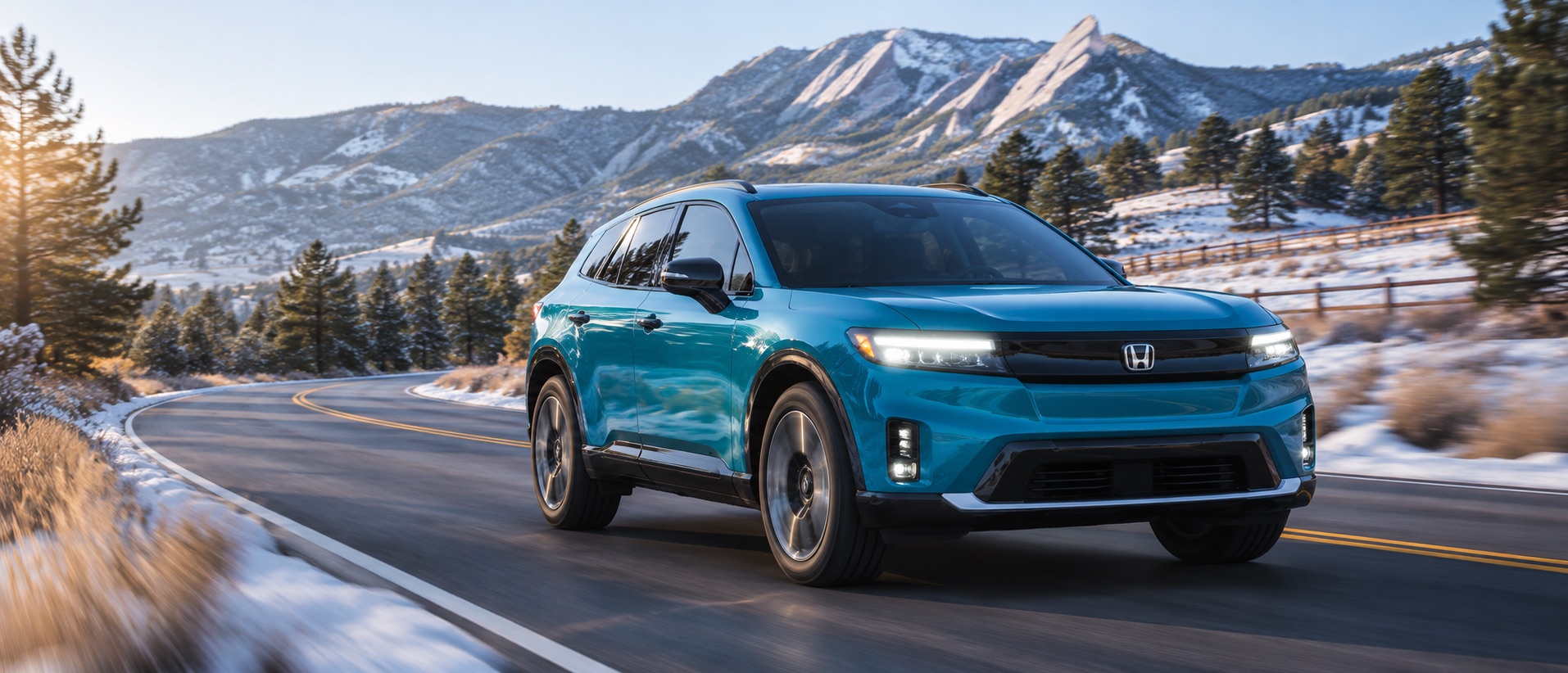
A clear morning in Boulder can become a freezing drive up into the foothills by afternoon. For Honda Prologue owners, that swing changes the energy needed to heat the cabin, how efficiently the battery delivers power, and how quickly a public charger can replenish it. The solution is to understand the numbers the Prologue displays, use its charging and comfort features thoughtfully, and plan around the conditions instead of relying on a single mileage estimate.
At Fisher Honda, we help Boulder County drivers compare electric ownership with the routes they actually travel. If your week includes US 36 commuting and an occasional trip into the mountains, the important questions are when to warm the vehicle, where to recharge, and how much battery reserve to keep—not whether an EPA estimate will hold mile for mile in snow.
At a glance
Quick Answers: Prologue Winter Range and Charging
Read four essentials before your next cold-weather drive
Does cold weather reduce Honda Prologue range?
Yes. Low temperatures, cabin heating, winter tires, highway speed, and hills can increase electricity use. The reduction varies, so no fixed winter-mileage promise is accurate.
What is the best daily winter habit?
Plug in when practical and warm the cabin before departure while connected to power. This preserves more of the battery energy for driving.
Can the Prologue fast-charge in winter?
Yes, but a cold battery can charge more slowly. Use Fast Charge Prep where equipped and verify the charger before you arrive.
Is 100% the right charge target for every snow trip?
No. Honda recommends 80% or less for ordinary use and provides specific guidance for steep mountain driving. Increase the target only when the route requires it.
● Know the starting point
2026 Honda Prologue Range Before Winter Conditions
The 2026 Prologue uses an 85-kWh battery, but its EPA range differs by drivetrain and trim. These official figures establish the comparison baseline. They are not predictions for a freezing morning, a climb to a ski area, or a trip with a roof box.
| 2026 Prologue configuration | EPA-estimated range | Drivetrain |
|---|---|---|
| EX / Touring | 308 miles* | Single-motor FWD |
| EX / Touring | 294 miles* | Dual-motor AWD |
| Elite | 283 miles* | Dual-motor AWD |
EPA-estimated ranges are for 2026 U.S.-market models and are intended for comparison only. Driving conditions, temperature, accessories, elevation changes, and battery condition affect real-world results. Swipe horizontally to view the table on narrow screens.
FWD EX and Touring have the highest official range figure. AWD EX and Touring trade some of that baseline efficiency for dual-motor traction, while Elite AWD has its own lower rating. For Colorado buyers, this is a choice between configuration priorities—not a formula for deducting a certain percentage on a cold day.
● Understand the difference
Why Winter Changes Electric SUV Range
Cold battery, less immediate energy efficiency
Low temperatures increase resistance inside the high-voltage battery. The vehicle also manages battery temperature to protect performance and charging, and some energy goes toward that work.
Cabin warmth uses the same energy supply
Defrosting glass, heating the interior, and keeping passengers comfortable draw electricity. Taking that energy from the charger before departure reduces the burden on the battery once the drive begins.
Highway speeds and winter conditions compound demand
Wind, wet pavement, dense air, low tire pressure, and added winter gear can raise consumption. Driving faster on US 36 or into a headwind matters even when the battery starts warm.
Elevation changes the trip calculation
A climb asks the powertrain to do additional work. Going downhill can recover energy through regenerative braking, but recovery depends on battery state, temperature, traction, and road conditions.
A dashboard range estimate is a forecast based on recent use and current conditions. As temperatures, elevation, or heater demand change, the estimate can change too. For a winter trip, use that information as a live planning input—not an exact distance guarantee.
● Understand your dashboard
Why Your Prologue Can Show More Miles of Range Lost Than Miles Driven
A familiar winter surprise is driving 40 miles and watching the estimated remaining range drop by much more than 40 miles. That difference deserves an explanation, but it does not automatically mean the battery used an equivalent number of miles of energy or has lost capacity. The displayed mileage is the Prologue’s estimate of how far the remaining charge can take you under the driving conditions it has recently observed.
Battery state of charge (SOC)
How much charge remains
The battery gauge shows the high-voltage battery’s charge level as a percentage. Use this alongside the trip distance to track actual consumption from drive to drive. The percentage is not a fixed promise of future miles.
Estimated remaining range
How far that charge might take you
The mileage prediction responds to recent speed, driving habits, outside conditions and heating or cooling demand. A highway stretch in 10-degree weather can pull the projection down faster than the odometer rises, even when the battery is behaving as designed.
The useful test is not to compare the range-estimate drop with the odometer alone. Note your beginning and ending charge percentage, actual miles traveled, outside temperature and trip efficiency. If the vehicle has just left a heated garage, remember that the battery and cabin will encounter colder conditions on the road even though the initial display reflects a warmer start.
For a Boulder commute, the goal is a dependable pattern: learn how much battery your usual round trip consumes in mild weather versus freezing weather, then leave room for unexpected detours. One unusually low forecast after a cold drive is a reason to check the numbers, not enough information to diagnose a battery fault.
● Read what the vehicle records
Use the Prologue’s Energy Screens to See Where the Power Went
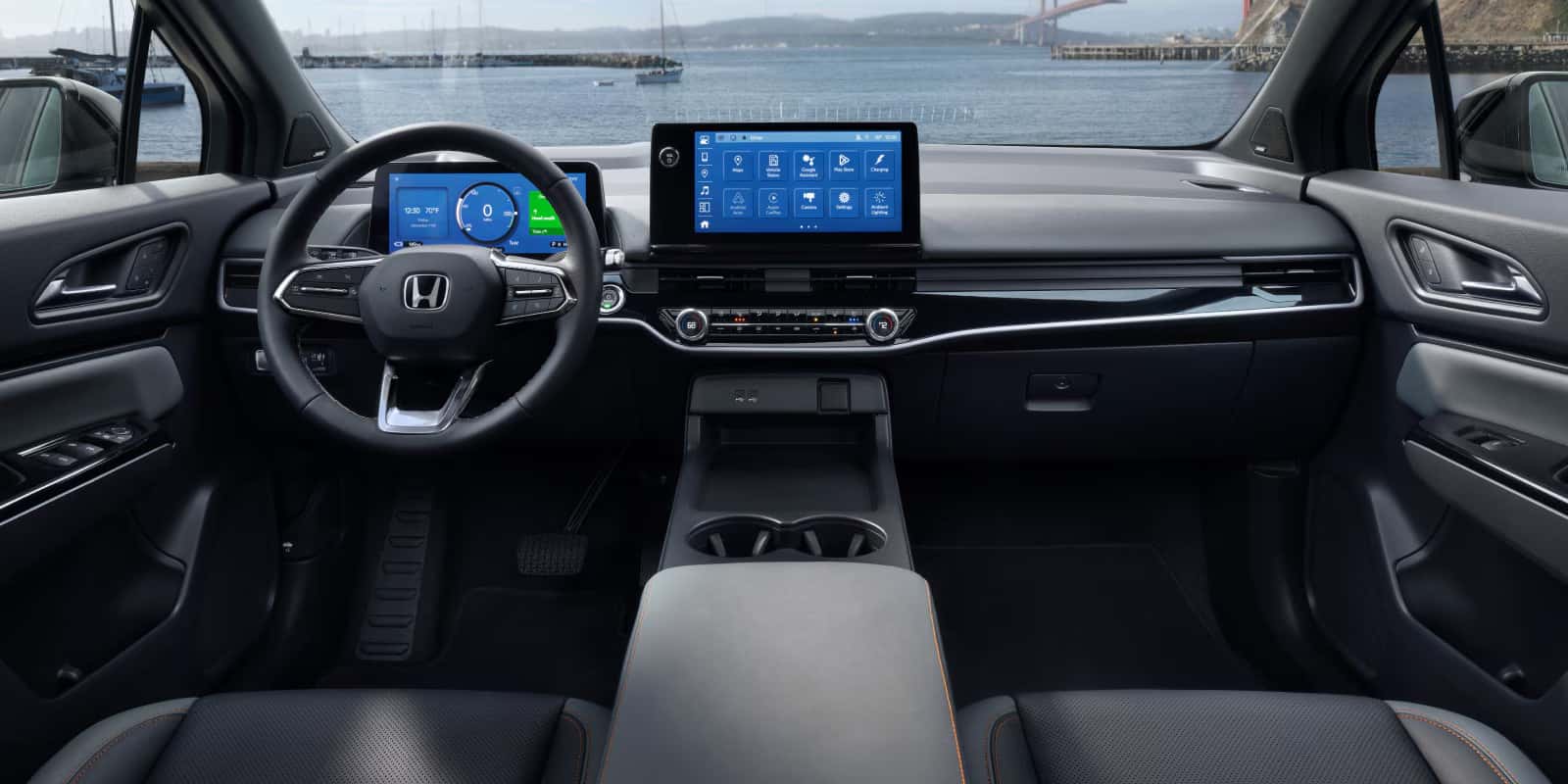
Honda gives 2026 Prologue drivers more useful information than the range estimate alone. From the infotainment screen, open Vehicle Status and look for Energy Info; available items can also be added to the Driver Information Center. The exact options visible depend on the vehicle and display configuration, and some selections are unavailable while driving.
Separate driving from climate demand
Energy Usage reports the share consumed by Driving, Remote Climate, and Climate and Fast Charge Prep since the vehicle started. Select a category for more detail. A large climate share after repeated short trips can explain why cold-weather efficiency differs from a long, steady drive.
Check distance and average efficiency
Current Trip displays the distance, average energy efficiency and elapsed time since startup. This is a better starting point for understanding one specific cold drive than judging an estimate that is constantly changing. It resets when you turn the vehicle off.
Spot changing conditions over the route
The efficiency display graphs energy use over recently driven distance, with instant and average efficiency information and regenerated range. Compare the flatter parts of a route with uphill or faster portions to understand why the vehicle’s forecast changes.
Compare repeatable drives
Trip 1 and Trip 2 track mileage since their last reset and can show approximate average efficiency where equipped. Save one for your regular commute or compare similarly driven routes across different temperatures rather than relying on a single cold-day estimate.
What we would look at first: If you tell us a 40-mile drive seemed to use 100 miles of displayed range, the next questions are the change in battery percentage, the trip’s miles per kWh, and the Energy Usage breakdown—not a guess about battery health based on the range number alone.
● Keep the comfort, manage the energy
Heater, Heated Seats, and Defrost: What Matters for Winter Range?
The Prologue’s quiet electric drive still gives you cabin heat and winter comfort; those systems simply share the battery’s energy with driving. Colorado conditions make the timing of heating important. A short trip with a cold interior can spend a greater proportion of its energy warming the cabin, while a sustained highway trip adds the demands of speed and cold air.
Warm the cabin before departure
Use the standard remote-start climate feature while plugged into a suitable home charger. Starting with clear glass and a comfortable cabin reduces the need for an extended, high-output warmup after you leave. A heated garage helps with the starting temperature, but it does not eliminate energy needs once you drive into freezing air.
Use seat heat where equipped
Honda notes that heating occupied seats uses less energy than warming the entire interior. Once the cabin is comfortable, a sensible temperature setting and available seat or steering-wheel heat can reduce the need for aggressive HVAC use. Keep passengers comfortable; efficiency is not worth driving cold or distracted.
Keep the windows clear
Front defrost and rear defogging draw energy, but visibility comes first. Use them whenever needed for safe driving, then return to normal climate settings when the glass stays clear. Clean interior glass also helps prevent repeated fogging on damp mountain drives.
If you want to see the difference rather than guess, compare Energy Usage on similar drives with different heating demand. Don’t use a single temperature or a fixed winter-range percentage as a promise for every trip.
● Two different jobs
Cabin Preconditioning vs. Battery Preconditioning
These terms sound similar but solve separate problems. The cabin is about comfort and using shore power before you drive; the high-voltage battery is about operating and charging temperature. Knowing which one to use helps prevent an avoidable slow charging stop.
Before the drive: warm the cabin
With the Prologue plugged in, use standard remote start or supported departure settings to warm the interior and clear the glass before you leave. Honda recommends using remote start while connected to power so cabin heating draws less energy from the battery. If your vehicle shows Charge Later and a preconditioning setting, you can align it with departure time.
Before the DC charger: prepare the battery
On the 2026 Prologue, Fast Charge Prep is described in the owner documentation where equipped. Select a compatible fast-charging stop through built-in Google Maps so preparation can begin automatically, or follow the applicable Charge Settings instructions. Depending on temperature, the battery may need additional time to reach its preferred charging condition.
Battery preparation does not make cold-weather charging instantaneous. A cold-soaked battery, a low-output station, or a high state of charge can still limit charging power. Confirm the exact controls in the owner’s manual for the model year you drive.
● Choose the right outlet
Honda Prologue Charging in Cold Weather
The best winter charging method depends on how much energy you need before the next departure. Home charging handles routines; public fast charging fills gaps during longer travel. The equipment, electrical installation, and outdoor temperature determine the actual result.
● Match charging to the commute
Will Level 1 Charging Replace What You Drive Each Winter Day?
For home charging, the most useful question is not how many miles a charger advertises in an hour. It is whether the car can replenish the energy you actually used before the next departure. A 120-volt outlet may fit a short and occasional driving pattern; a long commute, repeated heater use or consecutive mountain days can outpace it during very cold weather.
Short, repeatable daily trips
Level 1 can be a workable routine
A driver covering modest mileage and parking for long periods may recover enough overnight. Check the Prologue’s actual charging status after several winter nights and compare it with daily battery use. Leave time for battery warming and periods when the charge rate is reduced.
Frequent commutes or mountain weekends
Level 2 provides more flexibility
If a cold-weather round trip regularly removes more charge than your 120-volt setup replaces, upgrading to a properly installed 240-volt station creates a more dependable overnight schedule. It can also support plugged-in cabin warming before early departures, without requiring a public charging stop as part of an ordinary week.
Before deciding on a home setup, check three things
- How many miles and how much battery percentage you use on a typical winter weekday.
- How many hours the vehicle can remain connected before your next drive, including late arrivals and early starts.
- Whether a qualified electrician has confirmed that the intended outlet, circuit and charging equipment are suitable for continuous EV use.
Charging safety matters: Honda’s 2026 portable-charge-cord instructions prohibit extension cords, power strips, splitters, grounding adapters and surge protectors. Use compatible equipment and a properly grounded, correctly rated outlet; do not adapt a dryer or other household circuit on your own. For renters or homes without 240-volt charging, determine whether Level 1 really covers your use or whether accessible workplace or public charging would become a regular necessity.
● A real-world routine
A Better Winter Charging Plan for Boulder and the Mountains
Different journeys call for different charging choices. The same Prologue can feel effortless on a repeatable weekday route and demand much more planning on a cold, high-elevation weekend.
| Winter drive | Main range question | Practical approach |
|---|---|---|
| Boulder–Denver via US 36 | How much charge does the week require? | Plan repeatable overnight Level 2 sessions, warm the cabin while plugged in, and watch actual weekly consumption. |
| Boulder–Longmont via CO 119 | Will short trips and frequent heat-up cycles raise energy use? | Combine errands when convenient and avoid unnecessary cabin heat-up cycles on an unplugged battery. |
| Front Range to mountain destinations | Can the vehicle reach a working charger with a reserve after climbing? | Map the ascent, check station status and plug type, keep a backup stop, and allow extra time for a cold DC session. |
For mountain routes, do not assume the trip down will repay all the energy consumed on the climb. Regenerative braking can be reduced when the battery is cold or nearly full, and road grip always takes priority over energy recovery. Honda’s owner guidance specifically recommends an 80% or lower charge target on steep mountain routes to preserve regenerative-braking capability, while allowing charging above 80% when a non-mountain long trip requires it. Match the target to the actual route and manual.
● Before pulling out
Colorado EV Winter Trip Checklist
Check the weather on every leg
Account for the coldest section of the route, not just Boulder’s departure temperature.
Set a sensible departure charge
Honda recommends 80% or less for daily driving. For longer routes, use the amount needed and follow mountain-driving guidance.
Preheat while plugged in
Warm the cabin and clear glass before departure to conserve battery energy.
Build in an arrival reserve
Plan to reach the next verified charging stop with extra battery, rather than approaching empty; Honda advises avoiding levels below 20% when practical.
Confirm charger power and connector
Check whether the station is operational, the charging speed, and any Honda-approved adapter requirements.
Name a second charging option
A backup matters when winter weather, queues, or a station outage change the plan.
Use Fast Charge Prep if equipped
Route to the intended DC station using the supported built-in navigation so the battery has a chance to prepare.
Recheck after the first cold leg
Update the rest of the trip based on observed use instead of holding to the original summer estimate.
● Know when to investigate
Cold-Weather Range Change or a Warning That Needs Attention?
A changing mileage prediction is common in winter. A dashboard warning about propulsion, charging or the battery is a different matter and deserves the action specified in the Prologue owner’s manual. The vehicle can limit power in very cold conditions to manage its high-voltage battery; that is not the same as every unusually low range estimate being harmless.
Range forecast changes without a warning
Check your state of charge, miles driven, efficiency data, temperature, speed and climate usage over a few comparable trips. A large forecast adjustment alone cannot tell you how much capacity the battery has or whether it needs repair.
A temperature or reduced-power message appears
Follow the exact instruction on the screen. Honda documents messages for reduced acceleration and very cold batteries. If the vehicle displays BATTERY TOO COLD, PLUG IN TO WARM, the 2026 manual specifies Level 2 charging to warm the battery enough for propulsion or charging. Do not assume Level 1 will resolve that warning.
If charging repeatedly fails under suitable conditions, a service message persists, or the vehicle is not operating as its instructions describe, stop treating it as a range-estimate question and arrange an appropriate inspection. At Fisher Honda, our factory-trained and ASE-certified service team is available for vehicle-specific service questions. We would rather help you understand a warning than make an unsupported diagnosis from a screenshot of the mileage display.
If your Prologue displays a warning or the same charging concern continues across comparable conditions, our team can help you take the next step. Schedule a service appointment at Fisher Honda.
● Grip matters more
Snow Traction, Tires, and Charging Hardware
Dual-motor AWD is available on the Prologue and standard on the Elite. It can help distribute power for traction when accelerating on slippery roads*, but it cannot shorten stopping distance on ice. Appropriate winter-rated tires, tread depth, tire pressure, visibility, and speed are fundamental for a safe Colorado winter drive. Honda also recommends turning off One-Pedal Driving on slippery roads; you can still brake normally and should follow the vehicle’s winter-driving instructions instead of prioritizing regenerative energy recovery over control.
If you park outdoors, brush snow and ice away from the charging-port door before opening it and follow the charger manufacturer’s weather-use instructions. Do not tug on a frozen charging connector or leave it lying in snow. Before a mountain departure, check tire pressures when the tires are cold, clear the roof and glass, and make sure the chosen charging location will be accessible in winter conditions.
For a daily driver facing occasional storms, the simplest routine is to prepare the car while plugged in, drive conservatively, and recharge before a low battery forces an unplanned detour. For mountain travel, tire choice and weather forecasts deserve as much attention as the charging app.
● A clear next step
Compare a Prologue for Your Actual Winter Routine
An EV decision becomes clearer when you compare it against your longest regular drive, whether home charging is available, and how often you head into the mountains. Fisher Honda’s approach is straightforward: compare the Prologue configurations and current inventory, review your charging situation, and get answers without guessing what the weather will do to range.
We serve Boulder-area and Front Range drivers with practical guidance and transparent conversations. You can explore current Prologue inventory first, then use the official model information and charging resources to prepare the questions that matter for your home, workplace, and travel habits.
Why Shop With Us
Why Shop Fisher Honda for Your Prologue
Choosing an electric SUV is also choosing the dealership behind it. At Fisher Honda, our three-generation family operation, honest pricing, no-pressure sales approach and factory-trained/ASE-certified service team give you concrete reasons to feel confident about the purchase and the ownership experience that follows.
Three Generations of Fisher Family Heritage
Our family-operated business spans three generations, and the Fisher family’s roots in the Boulder automotive community go back to 1968. We bring that long-standing local commitment to the way we welcome Prologue shoppers and build relationships beyond delivery.
Honest Pricing and Clear Purchase Details
Honest pricing is part of how we do business. We help you examine the Prologue’s listed price, vehicle equipment, trade-in value and financing choices together, so you can judge the purchase on its full details rather than a single monthly-payment figure.
No High-Pressure Manager Runaround
We leave the high-pressure “let me talk to my manager” routine out of your shopping experience. Ask direct questions, compare your options and decide whether the Prologue fits your charging routine and winter driving needs without a pressure-driven sales conversation.
Factory-Trained and ASE-Certified Technicians
Our factory-trained and ASE-certified service technicians are part of the support you have after the sale. For maintenance questions or model-specific service needs, you have a local Honda service team to consult rather than sorting through generic vehicle advice alone.
Common Prologue Winter Questions
Honda Prologue Cold-Weather FAQs
Does the Honda Prologue lose range in cold weather?
Cold temperatures can reduce the Prologue’s usable driving range because the battery works less efficiently and heating the cabin uses energy. The amount varies with temperature, speed, terrain, tires, and climate-control settings; there is no single winter-range figure for every Colorado trip.
How many miles will a Honda Prologue go in a Colorado winter?
There is no reliable fixed winter mileage figure. For reference, the 2026 Prologue is EPA-rated at up to 308 miles* for EX/Touring FWD, 294 miles* for EX/Touring AWD, and 283 miles* for Elite AWD in standardized testing. Watch your vehicle’s current estimate and leave a generous reserve for winter trips.
Should I warm up the Prologue before leaving?
Yes. For a more comfortable start without drawing as much energy from the battery, warm the cabin while the vehicle is plugged in. The 2026 Prologue has standard remote start, and compatible departure or charging settings can support cabin preconditioning.
Is cabin preconditioning the same as battery preconditioning?
No. Cabin preconditioning warms or cools the passenger compartment. Battery conditioning manages the high-voltage battery temperature; Fast Charge Prep, where equipped, prepares the battery for a DC fast-charging stop. These solve different winter problems.
Does the Prologue have Fast Charge Prep for winter charging?
The 2026 Prologue owner documentation describes Fast Charge Prep where equipped. When a compatible fast-charging stop is added through built-in Google Maps, preparation can begin automatically. Check the controls and instructions for your vehicle rather than assuming every model year or configuration works identically.
Can I charge my Prologue outdoors when it is snowing?
Yes, with approved, correctly installed charging equipment used according to its instructions. Keep the connector and charge port clear of snow and ice, never force a frozen connector, and protect equipment as directed by the manufacturer.
Is Level 2 home charging better than Level 1 for a Colorado winter?
Level 2 is usually the more practical choice for drivers with longer commutes or repeated cold-weather trips because it can replenish more energy overnight. Level 1 can still work for shorter daily mileage, but charging is much slower and cold-weather battery heating can reduce net energy added.
Will DC fast charging take longer when the battery is cold?
It can. Honda’s approximately 35-minute 20%–80% figure for the 2026 Prologue is a favorable-condition estimate, not a winter guarantee. Battery temperature, state of charge, station output, and charger availability all affect the actual stop.
Can the Prologue use Tesla Superchargers?
Access is available at compatible Tesla Supercharger locations with an appropriate Honda NACS-to-CCS adapter, subject to station and vehicle compatibility. Confirm the specific charger and adapter before planning a mountain trip.
Should I charge to 100% before driving into the mountains?
Not automatically. Honda advises a daily target of 80% or less unless the drive needs more charge, and its 2026 owner guidance notes that keeping the battery at 80% or less on steep mountain routes supports regenerative-braking capacity. Plan the required energy and charging stops rather than using 100% as a blanket rule.
Why did my Prologue lose more estimated range than miles I drove?
The range display is a prediction based on the remaining battery charge, recent driving conditions and climate use. On a cold highway drive it can fall faster than the odometer increases. Compare your starting and ending battery percentage, actual distance, Current Trip efficiency and Energy Usage before concluding that the battery has a problem.
How do I check what used the most energy on a winter trip?
In the 2026 Prologue, open Vehicle Status and look for Energy Info. Energy Usage separates Driving, Remote Climate, and Climate and Fast Charge Prep. Current Trip shows distance and average efficiency since startup, while Energy Efficiency shows recent efficiency trends. Available menu items and display choices may vary.
Does using the heater or heated seats reduce Honda Prologue range?
Yes. Heating the cabin and defrosting windows use energy, and heated seats also draw power. Honda notes that heating occupied seats uses less energy than heating the entire interior. Preheat the cabin while plugged in when practical, but always use enough defrost and cabin heat to drive comfortably with clear visibility.
What if my Prologue says BATTERY TOO COLD, PLUG IN TO WARM?
Follow the warning rather than relying on the remaining-mileage prediction. The 2026 Prologue owner manual says Level 2 charging is required to warm an excessively cold battery to the minimum temperature needed for propulsion or charging. Follow the vehicle instructions, and seek service guidance if warnings persist or the vehicle cannot operate normally.
Your Next Step
Keep Researching the Prologue or Start Shopping at Fisher Honda
Compare available Prologue vehicles, trade-in values and financing, or keep exploring model-year information and charging resources. The right next step depends on whether you are ready to see a vehicle or still weighing how electric ownership fits your routine.
Start Shopping at Fisher Honda
* Range estimates: 2026 Honda Prologue EPA-estimated driving-range ratings are based on standardized testing and are provided for comparison. Actual range depends on driving conditions, temperature, speed, terrain, climate-control use, accessories, load, battery condition, and other factors. Figures are not winter-range guarantees.
* Charging estimates: Honda publishes up to 34.1 miles of estimated range added per hour with a properly installed compatible 48-amp Level 2 station and approximately 35 minutes for a 20%–80% DC fast charge under stated conditions. Actual charge rates and times vary with station output, installation, battery temperature, state of charge, vehicle settings, outside temperature, and other factors. Consult the 2026 Prologue owner’s manual for limitations.
* Traction and ownership: All-wheel drive can assist acceleration on low-traction surfaces but does not replace appropriate tires, safe speeds, braking distance, or driver attention. Verify charging-station availability, compatible equipment and adapter requirements for your trip; follow the vehicle’s winter-driving and charging instructions.