Located At
Open Today Sales: 9 AM-7 PMOpen Today Service: 7:30 AM-6 PM


Fisher Honda helps drivers throughout Boulder County and the Front Range estimate trade-in value before financing, leasing, or upgrading into another vehicle. Understanding available equity early creates a clearer picture of payments, budget range, and how your current vehicle fits into the next purchase decision.
Car trade in value represents the amount a dealership applies as credit toward your next purchase when you trade in your vehicle. This figure is carefully calculated using factors such as:
Dealers adjust these baseline figures to account for local trends and their own overhead expenses. When you ask, “What is the trade in value of my car?” you’re essentially requesting a personalized estimate based on real-time data and hands-on inspection. Knowing this figure before you arrive removes guesswork from the negotiation.
Before you visit Fisher Honda, use our online appraisal tool to generate a ballpark range for your car trade in value. Here’s how it works:
This pre-appraisal empowers you with realistic expectations and bolsters your confidence when you step onto our lot. If you’re tracking the trade in value of my car over time, running this tool monthly can help you spot the ideal moment to maximize your credit.
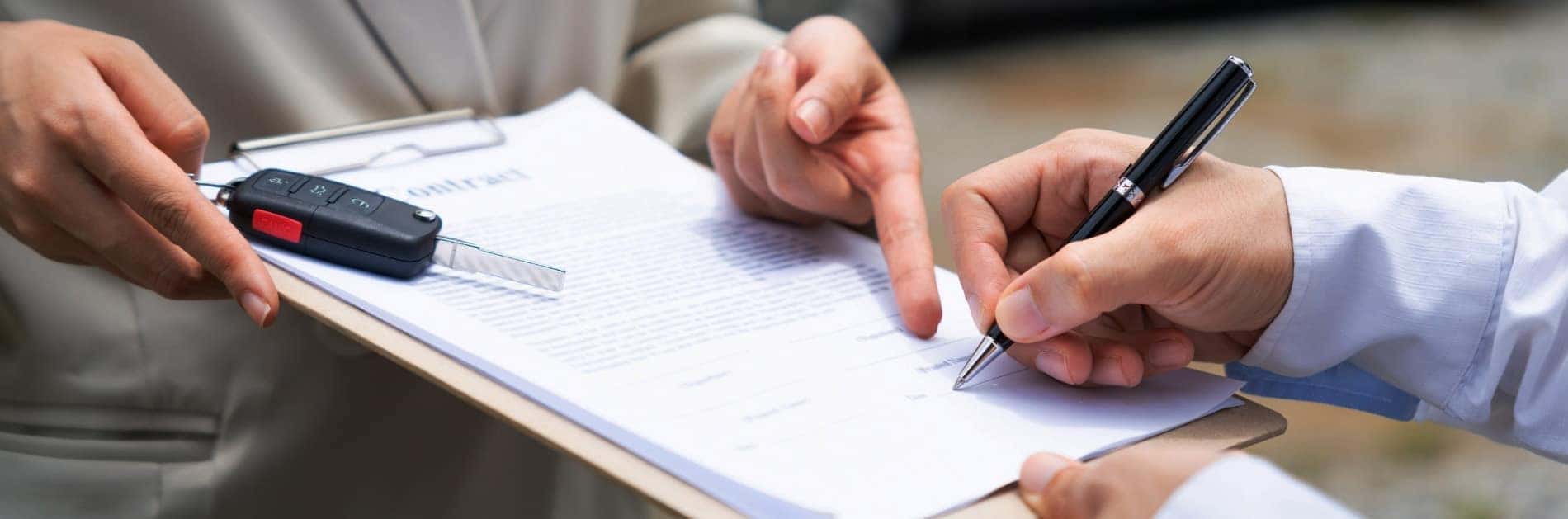
| Step | Your Role | Fisher Honda’s Role |
|---|---|---|
| 1. Preliminary Online Quote | Provide vehicle info via our digital form | Analyze data and deliver a preliminary range |
| 2. In-Dealership Inspection | Bring your car for a detailed review | Inspect condition, verify mileage, check history |
| 3. Offer Discussion | Evaluate and discuss the written trade-in proposal | Break down how we arrived at the credit amount |
| 4. Vehicle Selection | Choose your new or Certified Pre-Owned Honda | Apply your credit toward down payment or lease |
| 5. Finalize Paperwork | Sign title transfer, financing, and warranty docs | Complete DMV and tax paperwork, hand over keys |
Trading in at Fisher Honda typically takes under an hour from start to finish. Our trained appraisers explain every component of how your car trade in value was determined, so you leave feeling fully informed rather than second-guessing whether you received a fair offer.
1. Preliminary Online Quote Our digital form captures the essentials—year, model, trim, mileage, and condition rating. We combine that with current market data to give you a preliminary trade-in window. This figure isn’t set in stone but serves as a powerful negotiation anchor.
2. In-Dealership Inspection When you arrive, we perform a thorough evaluation of mechanical condition, verify odometer readings, and check the vehicle history report for any red flags. Our goal is to confirm that the details you provided online align with the car’s real-world state.
3. Offer Discussion You’ll receive a written offer that clearly outlines the credit toward your next Honda. We walk through each line item—auction data points, mileage deductions, and any reconditioning costs—so you understand how we arrived at your car trade in value.
4. Vehicle Selection Apply your trade-in credit as a down payment or capitalized cost reduction on a new or Certified Pre-Owned Honda. We help you explore lease versus finance scenarios to see where your credit stretches the furthest.
5. Finalizing Paperwork Our team handles title transfers, DMV filings, and tax credits. You just sign, hand over the keys, and drive off in your new Honda.
Getting a trade estimate early gives you a clearer picture of your next move, whether you are comparing payments, planning an upgrade, or deciding how your current vehicle fits into the next deal.

Proper preparation can boost your offer by hundreds—or even thousands—of dollars. The table below highlights key steps and their direct benefits.
When you put in the effort to address these areas, our appraisers see fewer items to deduct from the wholesale base value. Simple upgrades—like replacing worn windshield wipers or installing new floor mats—also contribute to a more polished presentation. If you check the trade in value of my car after completing these steps, you’ll often notice a noticeable increase in the preliminary estimate.
| Prep Step | What It Entails | How It Pays Off |
|---|---|---|
| Comprehensive Wash & Wax | Deep-clean exterior, finish with a protective sealant | Enhances curb appeal and signals careful ownership |
| Interior Deep Cleaning | Vacuum, shampoo carpets, wipe plastics and leather | Reduces perceived wear and tear adjustments |
| Paintless Dent Repair | Remove minor dings and creases without repainting | Preserves factory finish and avoids repaint costs |
| Engine Compartment Wipe-Down | Degrease and clear debris, detailing visible components | Demonstrates mechanical care and prevents deductions |
| Organized Service History | Compile receipts and records in chronological order | Builds trust and justifies higher credit |
Implementing these strategies not only boosts the actual dollar figure but also streamlines the appraisal, reducing back-and-forth over minor deductions.
When you want to confirm the trade in value of my car ahead of time, our appraisers can provide insight into recent local sales data that may influence your final offer.
Market demand for certain vehicle types ebbs and flows throughout the year. Understanding these patterns helps you choose the optimal time to trade in.
| Season | Market Demand Profile | Value Trend |
|---|---|---|
| Spring | High interest in sedans and compacts | Offers peak for fuel-efficient cars |
| Summer | Strong demand for SUVs and convertibles | SUV credits climb mid-year |
| Fall | Balanced demand across segments | Stable values for family vehicles |
| Winter | Lower demand for convertibles | Prices dip on seasonal models |
By aligning your trade-in with peak buying seasons, you can capitalize on heightened demand. For instance, parking your convertible in late spring rather than winter yields a far stronger dealer quote. Tracking local market trends also ensures that you know exactly how your timing influences the car trade in value you’ll receive.
| Factor | Explanation | Impact on Offer |
|---|---|---|
| Depreciation Profile | Vehicles lose 20–30% in the first year, ~50% over five years | Earlier trades secure better equity |
| Annual Mileage | Exceeding 12,000–15,000 miles per year may cut value | Lower-mileage cars draw stronger bids |
| Drivetrain & Fuel Type | AWD, hybrid, electric models in high local demand | Desired configurations hold value longer |
| Factory Enhancements | Premium audio, navigation, safety packages | May attract niche buyers, slight lift |
| Market Region Trends | Cold-weather areas favor AWD, warm climates favor convertibles | Regional preferences can add or subtract up to 5% |
Beyond condition and seasonality, several technical metrics shape your offer. The table below summarizes each factor and its typical impact.
When you ask, “What is the trade in value of my car in peak selling months?” these technical details illustrate why timing and usage matter so much. For example, trading a hybrid with low mileage in a green-conscious market almost always yields a premium above baseline estimates.
| Advantage | Dealership Trade-In | Private Sale |
|---|---|---|
| Convenience | Single-stop transaction for sale and purchase | Requires listing, calls, showings |
| Financial Security | Guaranteed payment and title handling | Risk of lowballers or counterfeit funds |
| Tax Incentive | Only pay sales tax on net price difference | Full tax liability on new purchase price |
| Transaction Speed | Often completed within hours | Can extend weeks or even months |
Deciding between a dealer trade-in and selling privately depends on your priorities – touched on in the table above.
At Fisher Honda, your credit is applied instantly toward your next lease or loan. You eliminate the hassles of advertising, screening potential buyers, and handling unpredictable payment methods.
When you’re looking for the trade in value of my car, we deliver a firm appraisal and immediate application of credit.
Your current vehicle can play a major role in the next financing or lease structure. Starting with a trade estimate helps create a more focused plan before narrowing down inventory or payment options.
For many shoppers, trade value becomes the number that helps the rest of the vehicle decision start making more sense.
Once you understand what your current vehicle may contribute, the next step usually becomes easier to narrow down. Some drivers start comparing used inventory. Others look at current Honda specials or move straight into the trade appraisal process to begin structuring the next deal more clearly.
Start with a trade estimate to understand how your current vehicle may affect financing, lease structure, payment range, or overall upgrade flexibility.
Used inventory gives trade-in shoppers more flexibility when comparing pricing, mileage, features, and payment possibilities after reviewing vehicle equity.
Current Honda offers can help shoppers compare how trade equity and available incentives work together before choosing the next vehicle.
At Fisher Honda, we understand that trade value shapes much more than a single number on paper. It affects financing structure, lease flexibility, upgrade timing, and the overall direction of the next vehicle decision. Our goal is to help drivers understand how their current vehicle fits into the bigger picture before narrowing down inventory or payment options.
Our team reviews condition, mileage, ownership history, equipment, and current market demand with a practical approach designed to keep the process straightforward and transparent. Drivers throughout Boulder County often start here because understanding available equity early creates a more focused shopping process, especially when comparing newer Honda models, certified inventory, or changing vehicle needs along the Front Range.
We are proud to serve drivers from Boulder, Louisville, Superior, Broomfield, Erie, Longmont, Firestone, Thornton, Brighton, Niwot, and Lafayette with trade-in guidance built around clarity, realistic numbers, and a smoother transition into the next vehicle.
