Located At
Open Today Sales: 9 AM-7 PMOpen Today Service: 7:30 AM-6 PM



When it comes to the Honda CR-V vs HR-V showdown, both SUVs exemplify Honda’s steadfast commitment to reliability, efficiency, and thoughtful design.
The CR-V commands attention with its spacious cabin, available hybrid powertrain that balances spirited performance with impressive fuel economy, and a wealth of tech and safety features designed to keep every journey comfortable and connected. Whether you’re loading up for a family road trip or chasing weekend adventures, the CR-V rises to the occasion with versatility and poise.
On the other hand, the HR-V proves that big things can come in compact packages. Its nimble footprint and agile handling make urban driving and tight parking spots a breeze, while clever cargo solutions and surprisingly generous interior space ensure practicality never takes a back seat. With a straightforward powertrain, efficient fuel consumption, and Honda’s full suite of driver-assist technologies, the HR-V delivers an ideal blend of simplicity and confidence for daily commutes and city escapes.
| Model | 2026 Honda CR-V | 2026 Honda HR-V |
|---|---|---|
| Available Trims |
|
|
| Powertrain Options | Gas and Hybrid | Gas only |
| AWD Availability | Available on all trims | Available on all trims |
| Transmission | CVT or E-CVT (Hybrid) | CVT |
| Base Trim | LX Starting at $30,920 MSRP* | LX Starting at $26,200 MSRP* |
| Top Trim | Sport Touring Hybrid Starting at $42,250 MSRP* | EX-L Starting at $30,920 MSRP* |
When comparing the Honda CR-V vs HR-V, it’s clear that both 2026 models cater to distinct audiences while maintaining core Honda values like reliability, comfort, and all-weather capability. The CR-V lineup is notably more expansive, offering seven trims including hybrid and off-road-oriented options such as the Sport Hybrid, TrailSport Hybrid, EX-L Hybrid, Touring Hybrid, and Sport Touring Hybrid. In contrast, the HR-V presents a simpler three-trim lineup with LX, Sport, and EX-L, exclusively powered by a gas engine.
A key differentiator in the Honda CR-V vs HR-V debate is the powertrain versatility. The CR-V stands out with both gas and hybrid configurations, ideal for drivers looking to maximize fuel efficiency or tap into elevated torque for weekend adventures. Meanwhile, the HR-V keeps things straightforward with a single gas-powered engine across all trims — a great fit for urban commuting and predictable performance.
Both models offer available all-wheel drive (AWD) across their trim levels, making them suitable for Colorado’s varied driving conditions — from snowy mountain roads to dry urban streets. Transmission options diverge slightly: while both utilize a Continuously Variable Transmission (CVT), the CR-V’s hybrid trims switch to an advanced E-CVT system that complements its electric motor setup.
In terms of pricing, the CR-V reflects its broader capability and tech features with a starting MSRP of $30,920 for the base LX trim, climbing up to $42,250 for the top-tier Sport Touring Hybrid. The HR-V, by contrast, offers greater affordability, starting at $26,200 for the LX and topping out at $30,920 for the EX-L — making it a smart choice for value-focused shoppers.
In summary, the Honda CR-V vs HR-V comparison illustrates the CR-V’s greater diversity in trims, advanced powertrain options, and elevated pricing — all pointing toward a more robust SUV experience. The HR-V, on the other hand, delivers a leaner lineup and budget-friendly access to AWD and essential features, appealing to practical drivers in search of simplicity and efficiency.

| Feature | 2026 CR-V | 2026 HR-V |
|---|---|---|
| Base Engine | 1.5L Turbo I4 (190 hp) | 2.0L I4 (158 hp) |
| Hybrid System | 2.0L I4 + 2-Motor (204 hp) | Not available |
| Torque (Gas) | 179 lb-ft | 138 lb-ft |
| Transmission | CVT / E-CVT (Hybrid) | CVT |
| Drivetrain | FWD or AWD | FWD or AWD |
| Fuel Economy | CR-V (AWD) | HR-V (AWD) |
| City / Hwy / Combined | Hybrid: 39 / 34 / 36.5 mpg* Gas: 26 / 31 / 28 mpg* |
25 / 30 / 27 mpg* |
| Fuel Type | Regular | Regular |
In the comparison of Honda CR-V vs HR-V, the powertrain and drivetrain offerings reveal significant performance and efficiency distinctions that cater to different buyer priorities. The 2026 Honda CR-V starts with a turbocharged 1.5L inline-4 engine generating 190 horsepower and 179 lb-ft of torque, providing a lively balance of power and responsiveness. For those seeking even greater fuel economy and torque delivery, the CR-V’s hybrid system combines a 2.0L inline-4 engine with a two-motor setup to produce a total of 204 horsepower — a standout feature absent in the HR-V lineup.
By contrast, the 2026 Honda HR-V relies solely on a naturally aspirated 2.0L inline-4 engine, outputting 158 horsepower and 138 lb-ft of torque. While less powerful, it offers consistent drivability for city commuters and budget-conscious drivers. Both models are equipped with a Continuously Variable Transmission (CVT), although the CR-V’s hybrid trims employ an E-CVT tailored to the electric motor’s characteristics for smoother acceleration and improved efficiency.
In drivetrain flexibility, the CR-V and HR-V remain evenly matched, each offering front-wheel drive as standard with optional all-wheel drive across all trims — ideal for drivers in variable climates or terrain-heavy regions. Fuel economy further underscores the CR-V’s hybrid advantage, with AWD hybrid models achieving an impressive 39 mpg city / 34 mpg highway / 36.5 mpg combined, compared to 28 mpg combined for its gas counterpart. The HR-V, using a gas-only engine, delivers slightly lower figures at 25 mpg city / 30 mpg highway / 27 mpg combined, though it maintains respectable efficiency for its class.
Ultimately, the Honda CR-V vs HR-V comparison shows that the CR-V excels in performance diversity and fuel-saving technologies, particularly through its hybrid powertrain. The HR-V stays true to a simpler, fuel-efficient approach with solid specs, making it a practical choice for drivers seeking straightforward value without hybrid complexity.
| Exterior Dimensions | CR-V | HR-V |
|---|---|---|
| Length | 184.9 in | 171.3 in |
| Width | 84.6 in (with mirrors) | 70.5 in |
| Height | 66.5 in | 62.6 in |
| Ground Clearance | 8.2 in | 7.0 in |
| Interior Dimensions | CR-V | HR-V |
| Seating Capacity | 5 | 5 |
| Passenger Volume | Up to 106 cu ft | 95 cu ft |
| Cargo Volume (Seats Up/Down) | 39.3 / 76.5 cu ft | 24.4 / 54.9 cu ft |
| Legroom (Front/Rear) | 41.3 / 41 in | 40.9 / 39.4 in |
When evaluating the Honda CR-V vs HR-V, size and space are key areas where the CR-V asserts a noticeable advantage. The 2026 Honda CR-V offers larger exterior dimensions in every category — measuring 184.9 inches long, 84.6 inches wide with mirrors, and 66.5 inches tall. This added size contributes to a more substantial presence on the road and improved interior volume. In contrast, the HR-V is more compact at 171.3 inches long, 70.5 inches wide, and 62.6 inches tall, making it ideal for tight parking spots and nimble urban driving.
Ground clearance also reflects a more rugged character in the CR-V, which stands 8.2 inches off the ground compared to the HR-V’s 7.0 inches — a helpful distinction for drivers venturing off pavement or tackling snowy conditions.
Inside the cabin, the Honda CR-V vs HR-V comparison continues to favor the CR-V for spaciousness. Both vehicles seat five passengers, but the CR-V delivers a more open and comfortable experience with up to 106 cubic feet of passenger volume, compared to the HR-V’s 95 cubic feet. This translates into more shoulder room, headspace, and overall comfort — especially useful on longer trips or with taller passengers.
Legroom is relatively close between the two, with the CR-V offering 41.3 inches in front and 41 inches in the rear, while the HR-V provides 40.9 inches up front and 39.4 inches in back — showing that despite its smaller size, HR-V still maintains respectable comfort dimensions for passengers.
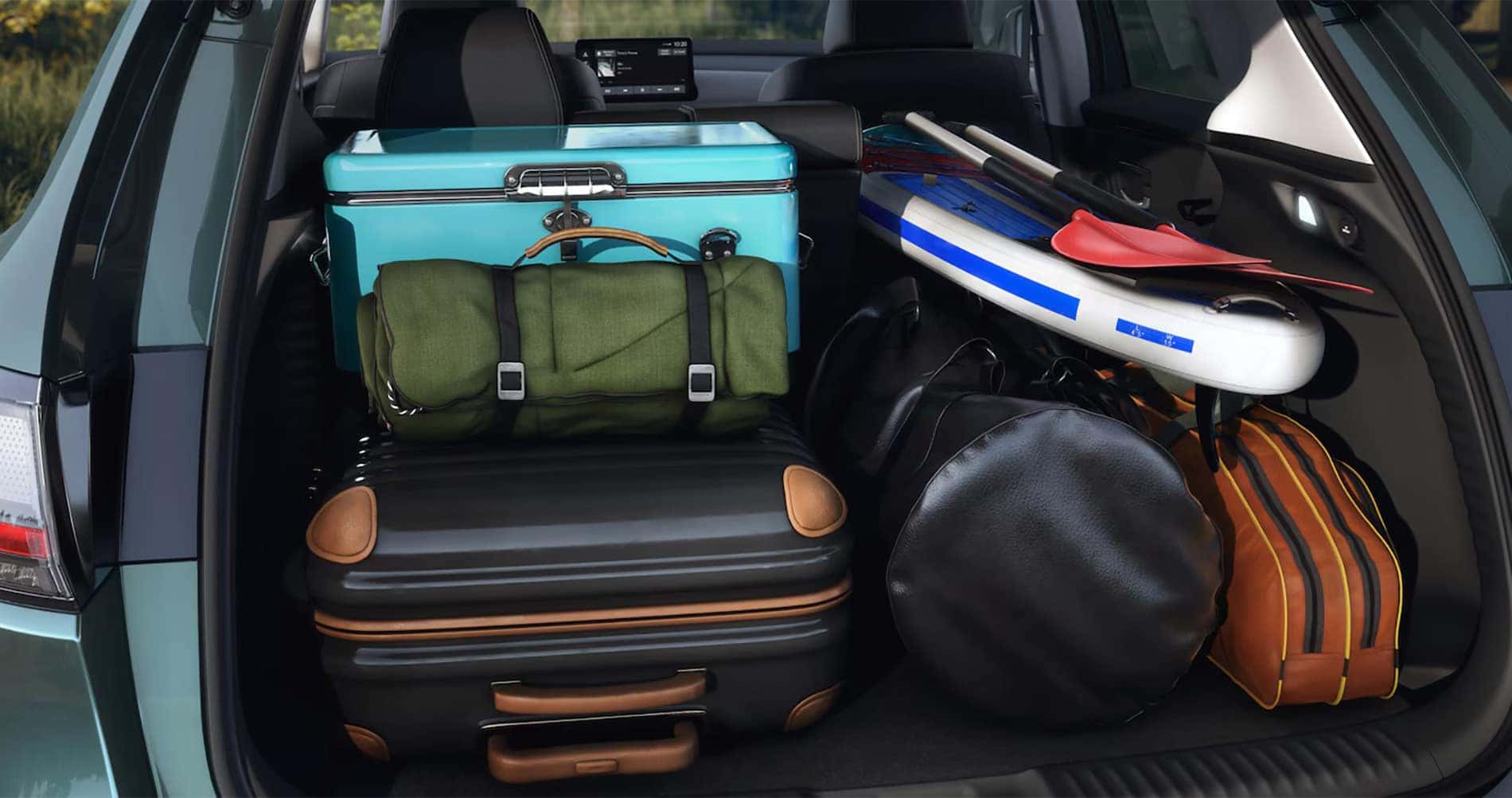
Cargo space is another decisive point. With the rear seats up, the CR-V provides 39.3 cubic feet of cargo volume, expanding to a generous 76.5 cubic feet with the seats folded down. The HR-V, while practical for daily errands and modest packing needs, offers 24.4 cubic feet (seats up) and 54.9 cubic feet (seats down).
In sum, the Honda CR-V vs HR-V sizing breakdown highlights the CR-V’s premium on space, versatility, and rugged readiness, while the HR-V presents a compact and city-friendly package that doesn’t skimp on comfort.
| Feature | CR-V | HR-V |
|---|---|---|
| Climate Control | Dual-zone standard | Single-zone |
| Audio System | Up to 12 speakers (Touring) | Up to 8 speakers (EX-L) |
| Display | 9″ or 10.2″ Touchscreen | 7″ or 9″ Touchscreen |
| Wireless CarPlay / Android Auto | Available | Available |
| Heated Seats | Front & Rear (Touring) | Front only |
| Parking Sensors | Available | Available |
| Moonroof | Available across trims | Available on EX-L |
| Upholstery | Fabric to Leather (perforated) | Fabric to Leatherette |
| Safety Suite | Honda Sensing®
|
Honda Sensing®
|
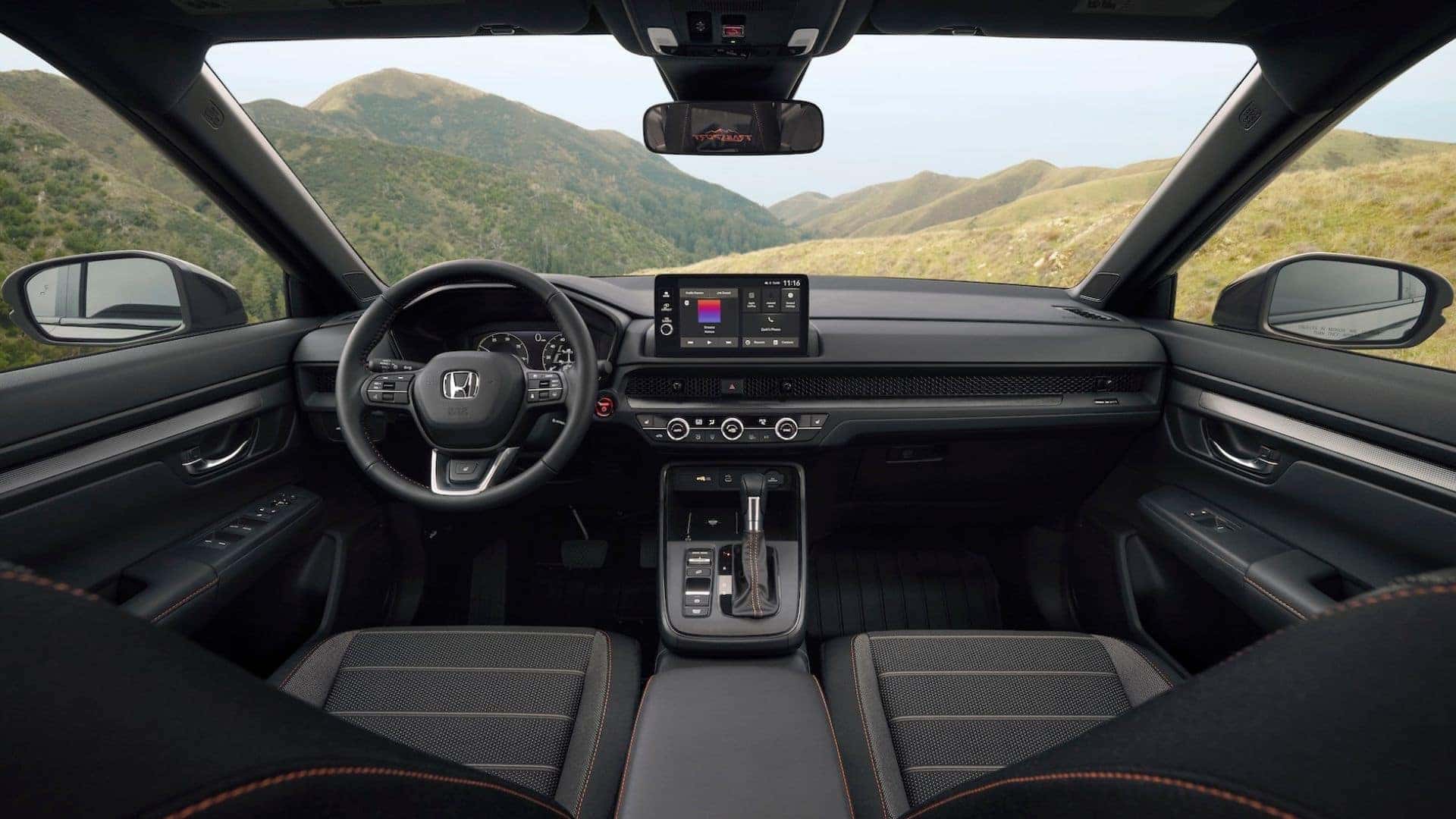
In the arena of Honda CR-V vs HR-V, the comfort, convenience, and safety features reflect the CR-V’s upscale leanings while the HR-V remains true to accessible practicality. Beginning with climate control, the 2026 CR-V equips dual-zone automatic climate control as standard, catering to personalized temperature settings for driver and passenger. The HR-V, meanwhile, offers single-zone climate control, which gets the job done efficiently in its more compact cabin.
Audio and display capabilities continue this pattern. The CR-V’s higher trims boast a premium 12-speaker sound system and larger touchscreens — 9 inches or even 10.2 inches depending on trim — ideal for immersive audio and easy interface interaction. The HR-V provides up to 8 speakers on the EX-L and screen sizes ranging from 7 to 9 inches, making it functional but modest by comparison.
Both models support wireless Apple CarPlay and Android Auto, ensuring seamless smartphone connectivity. However, comfort enhancements diverge again with heated seats available in both rows on the CR-V’s Touring trim, while the HR-V only offers front heated seats. Additionally, parking sensors are available on both vehicles for extra confidence when maneuvering in tight spaces.
Moonroof access also signals a difference in trim flexibility: the CR-V offers it across multiple trims, while the HR-V reserves this feature for its EX-L model. Upholstery choices vary, too — the CR-V allows a progression from fabric to perforated leather, whereas the HR-V provides fabric or leatherette, emphasizing its budget-conscious appeal.
Where both models align is in their comprehensive Honda Sensing® safety suite, which includes:
This shared foundation ensures that, regardless of model, drivers benefit from forward-thinking safety technology.
In summary, the Honda CR-V vs HR-V feature breakdown shows the CR-V catering to comfort seekers and tech enthusiasts with more premium options and trim versatility. The HR-V, though more modest, still delivers essentials in safety and connectivity — making it a sensible choice for everyday simplicity with solid protection.

The Honda CR-V stands out as a go-anywhere SUV that blends roomy comfort, hybrid fuel savings, and a rich suite of tech and safety features—perfect for those who demand versatility without compromise.
The Honda HR-V, by contrast, excels in urban agility and budget-friendly simplicity, offering a compact footprint, clever cargo solutions, and key Honda comforts that make city driving a breeze.
In the Honda CR-V vs HR-V comparison, the 2026 CR-V stands out with its versatile powertrain lineup and spacious interior. Offering both a turbocharged 1.5-liter gas engine and an efficient hybrid system that delivers up to 204 horsepower, it balances spirited performance with impressive fuel economy. Inside, up to 106 cubic feet of passenger volume and as much as 76.5 cubic feet of cargo space ensure that families and adventurers alike have ample room for gear and passengers. Technology and comfort are elevated through dual-zone climate control, available leather seating, a 10.2-inch touchscreen, and Honda Sensing® safety features standard across all trims, making the CR-V a top choice for those seeking capability without compromise in the Honda CR-V vs HR-V lineup.
In contrast, the HR-V excels in urban-friendly agility and value within the Honda CR-V vs HR-V debate. Its naturally aspirated 2.0-liter engine, while less powerful, provides dependable performance and up to 27 mpg combined, perfect for daily commuting. The HR-V’s compact dimensions—171.3 inches in length and 24.4 cubic feet of cargo space with seats up—make parking and city driving entirely stress-free, yet its Magic Seat® configuration still allows for surprisingly flexible loading. Standard Honda Sensing® safety, available heated front seats, and a 9-inch touchscreen deliver modern convenience, wrapping urban practicality and essential comfort into an affordable package.
When it comes to finding your next Honda CR-V or HR-V, Fisher Honda stands out as Boulder’s go-to destination thanks to its convenient location, comprehensive services, and commitment to customer satisfaction. Situated at 6025 Arapahoe Road, just minutes from the Flatirons and Chautauqua Trailhead, our dealership makes it easy to test-drive your ideal SUV and get on the road with confidence.
Choosing Fisher Honda in Boulder means partnering with a dealership that knows the Honda CR-V vs HR-V comparison inside out, prioritizes your comfort and confidence, and provides the personalized support you deserve at every turn.
DISCLAIMERS :
* MSRP excluding tax, license, registration, $1,395 destination charge, and accessories. Dealer prices may vary. MSRP does not include $455 charge for premium colors.
* CR-V MPG : 28 city/33 highway/30 combined mpg rating for 2WD LX, EX & EX-L trims. 27 city/31 highway/29 combined mpg rating for AWD LX, EX & EX-L trims. 43 city/36 highway/40 combined mpg rating for the 2WD Sport & Sport-L Hybrid trims. 40 city/34 highway/37 combined mpg rating for AWD Sport, Sport-L & Sport Touring Hybrid trims. 38 city/33 highway/35 combined mpg rating for TrailSport Hybrid AWD trim. Based on 2026 EPA mileage ratings. Use for comparison purposes only. Your mileage will vary depending on how you drive and maintain your vehicle, driving conditions, battery-pack age/condition (hybrid trims) and other factors.
* HR-V MPG : 26 city/32 highway/28 combined mpg rating for 2WD trims. 25 city/30 highway/27 combined mpg rating for AWD trims. Based on 2026 EPA mileage ratings. Use for comparison purposes only. Your mileage will vary depending on how you drive and maintain your vehicle, driving conditions and other factors.
