Located At
Open Today Sales: 9 AM-6:30 PMOpen Today Service: 8 AM-4 PM


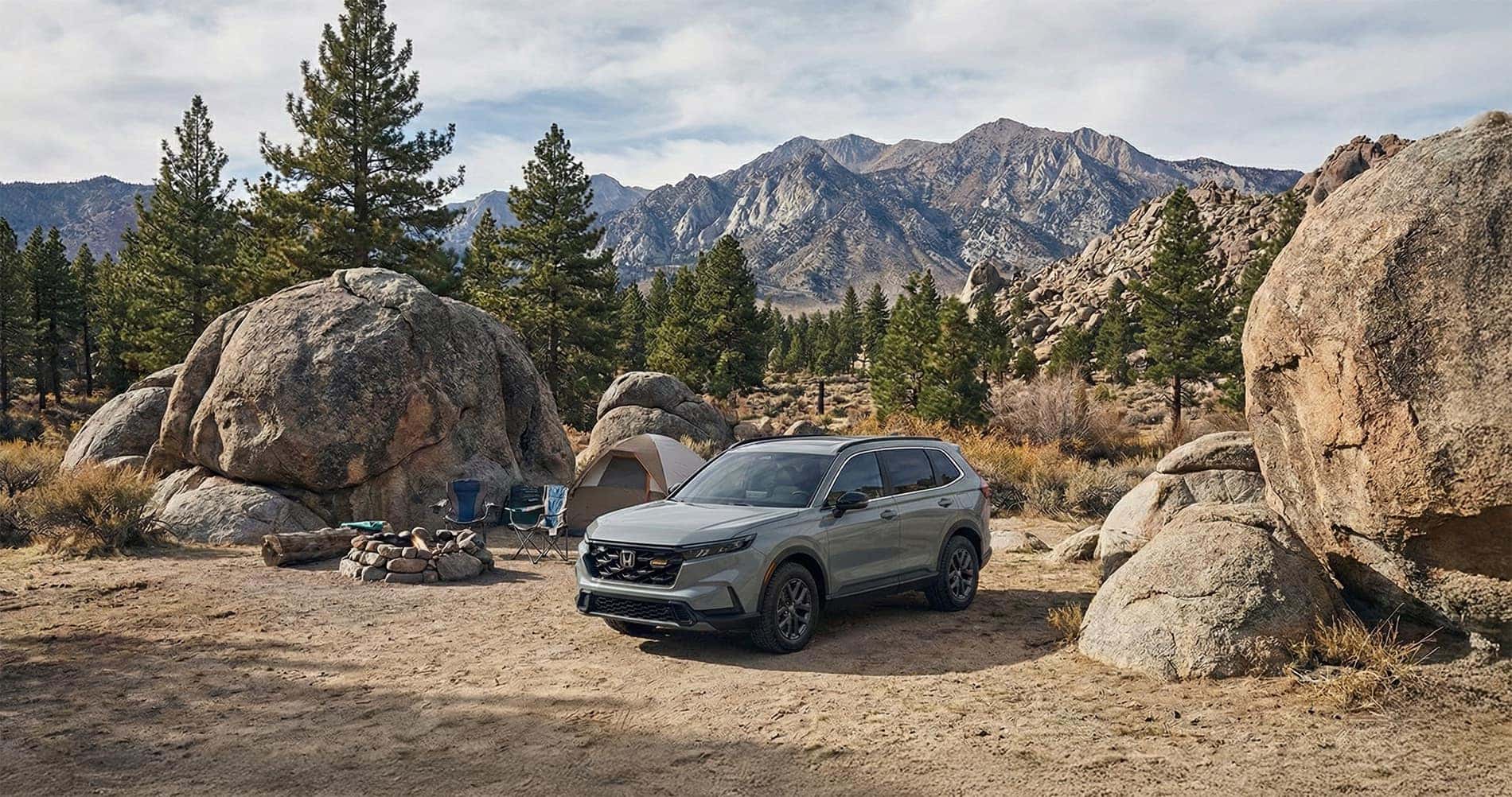
Understanding Honda CR-V cargo space is essential if you’re choosing a compact SUV based on everyday usability, not just styling or fuel economy. Whether you’re hauling groceries, luggage, sports gear, or larger items with the rear seats folded down, the CR-V is designed to balance interior comfort with practical storage capacity.
In this guide, we’ll break down Honda CR-V trunk space using exact OEM measurements, including cargo volume with the rear seats up and maximum cargo capacity with the second row folded flat. You’ll also see how the CR-V compares to key competitors in its class and explore real-world examples that show what actually fits in the cargo area—not just what the numbers say on paper.
To make things easy, we’ve organized this article into clear sections with data tables, comparisons, and practical explanations so you can quickly understand how the CR-V’s cargo area works in everyday situations.
LX | All Other Trims
All Trims
CR-V | CR-V Hybrid
| Honda CR-V Cargo Space | |
|---|---|
| Cargo Configuration | Cargo Volume |
| Cargo Volume With Rear Seat Up | 39.3 Cu Ft (Gas Models) / 36.3 Cu Ft (Hybrid Models) |
| Max Cargo Volume With Rear Seat Down | 76.5 Cu Ft |
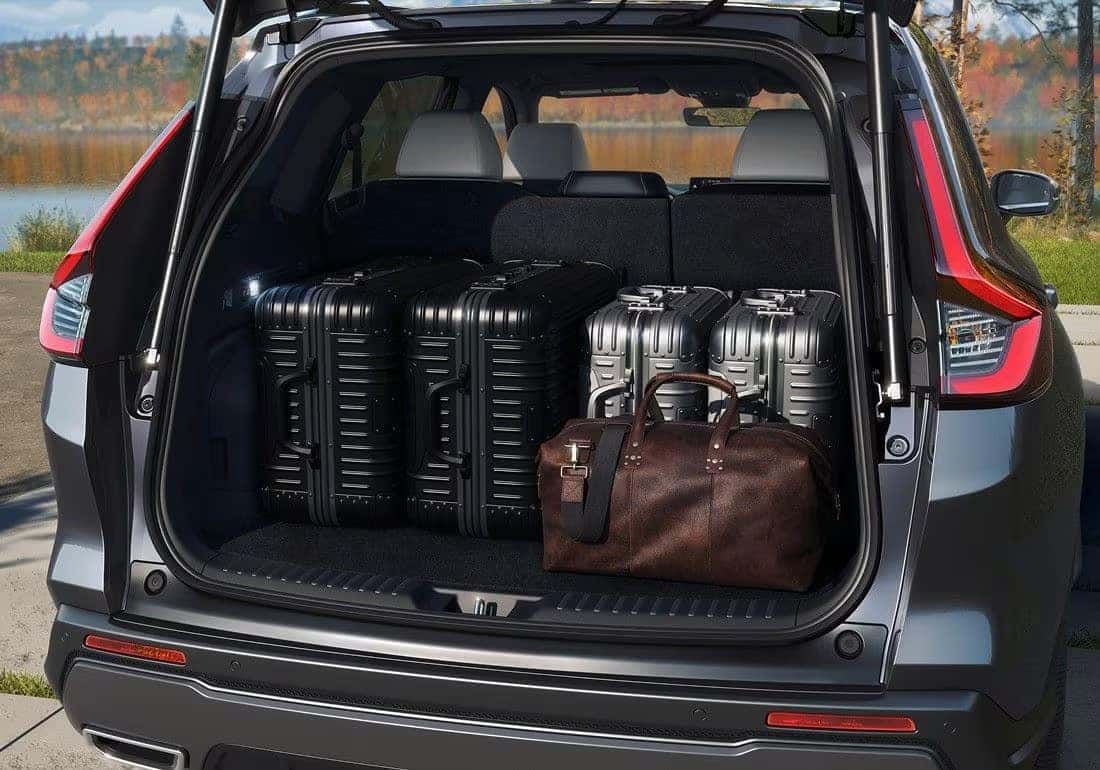
Honda CR-V cargo space is one of the biggest reasons this compact SUV continues to appeal to drivers who need flexibility without stepping up to a larger vehicle. With 39.3 cubic feet of cargo volume behind the second row in gas models, the CR-V easily handles everyday needs like grocery runs, sports equipment, or luggage for a weekend trip. Even the hybrid models, which trade a bit of space for added efficiency, still offer a very usable 36.3 cubic feet, making the difference minor in real-world use.
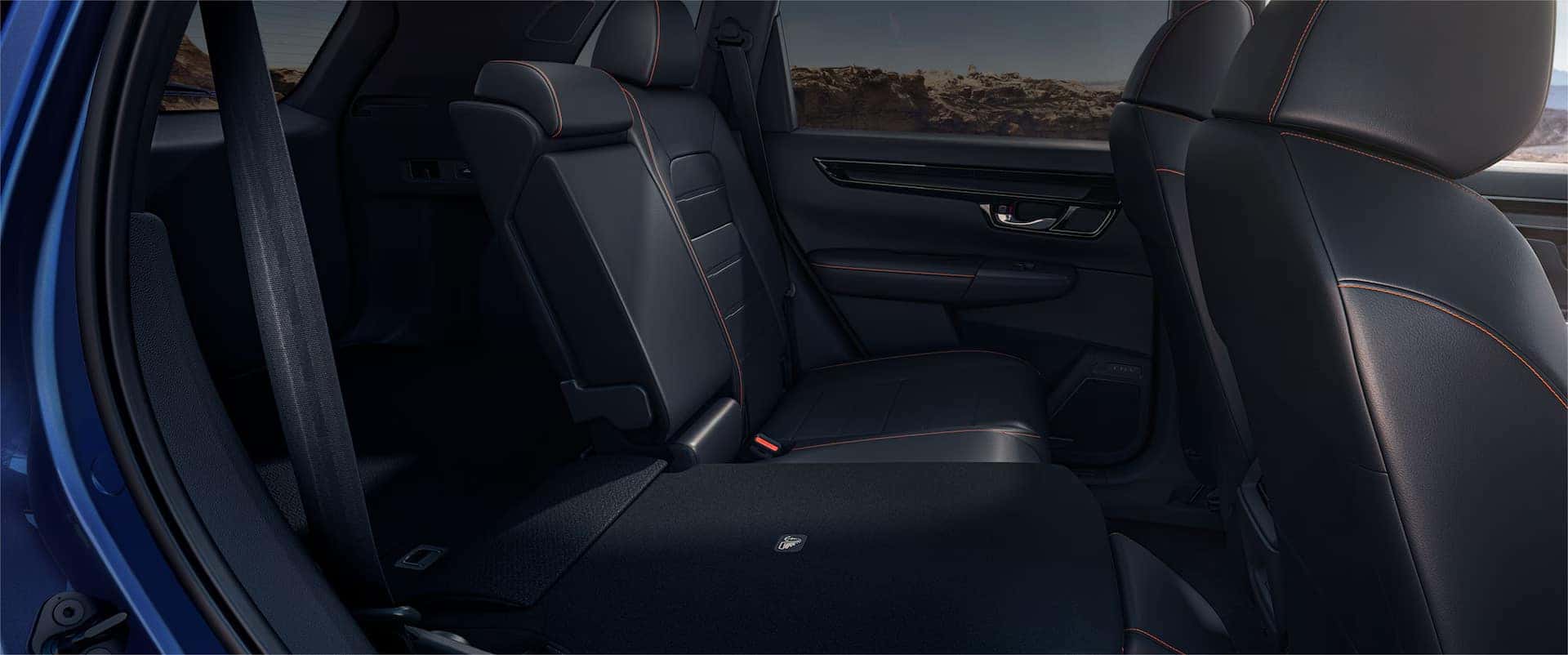
Where the CR-V really shines is when the rear seats are folded down. At 76.5 cubic feet of maximum cargo space, the vehicle transforms from a commuter-friendly SUV into something capable of hauling bulky items. This is where Honda CR-V trunk space becomes especially practical for tasks like moving furniture, transporting home improvement supplies, or packing up camping gear for longer trips. The flat load floor and and wide opening make loading and unloading easier, which matters more than raw numbers once you start using the space regularly.
For drivers around Boulder or Longmont, this balance is ideal. You get enough cargo volume to support active lifestyles and family routines without the size or fuel penalties of a midsize SUV. Compared to many competitors in the compact class, the CR-V offers a noticeably larger and more versatile trunk area, which means fewer compromises when life demands extra space. Whether seats are up or folded flat, the CR-V’s cargo area is designed to adapt to real daily demands.
| Cargo Space vs Competitors | ||
|---|---|---|
| Vehicle Model | Cargo Space / Trunk Size | Max Cargo Space / Seats Folded |
| 2026 Honda CR-V | 39.3 Cubic Feet | 76.5 Cubic Feet |
| 2026 Honda HR-V | 24.4 Cubic Feet | 55.1 Cubic Feet |
| 2026 Mazda CX-30 | 20.2 Cubic Feet | 45.2 Cubic Feet |
| 2026 Subaru Crosstrek | 19.9 Cubic Feet | 54.7 Cubic Feet |
This comparison highlights why Honda CR-V cargo space stands out so clearly within the compact SUV segment. When you look at the numbers side by side, the CR-V offers nearly double the usable trunk space of several key competitors. With 39.3 cubic feet available behind the rear seats, the CR-V immediately separates itself from models like the Mazda CX-30 and Subaru Crosstrek, which sit closer to the 20-cubic-foot range. In daily life, that difference is significant—it’s the difference between comfortably stacking groceries and gear versus constantly playing cargo Tetris.
The advantage grows even more noticeable with the seats folded. At 76.5 cubic feet of maximum cargo volume, the CR-V provides space that many compact SUVs simply can’t match. This makes the Honda CR-V trunk space far more adaptable for larger tasks, such as hauling furniture, loading bikes, or packing for extended trips. By comparison, competitors top out in the mid-40s to mid-50s, which limits what you can realistically carry in one trip.
For drivers in areas like Boulder or Broomfield, where outdoor activities, home projects, and active schedules are common, this added flexibility can reduce the need for roof racks or trailers. It also means fewer compromises when choosing between passengers and cargo. Even compared to the Honda HR-V, the CR-V delivers a noticeable step up in both trunk size and overall usability.
Ultimately, this table shows that the CR-V isn’t just competitive—it’s a clear leader when cargo capacity is a priority, offering real-world space that supports everyday life without moving up to a larger SUV.
| Real-World Examples of What Fits in the Honda CR-V Cargo Space | |
|---|---|
| Groceries | A large weekly grocery haul for a family, including bulk items, cases of drinks, and reusable shopping bags. |
| Luggage for a Weekend Trip | Multiple suitcases or duffel bags for 3–4 people, plus room for a cooler or extra backpacks. |
| Sports & Outdoor Gear | Golf bags, folding chairs, sports totes, or camping gear such as tents and sleeping bags. |
| Baby & Family Gear | A full-size stroller, diaper bags, portable crib, and additional travel items without crowding the cabin. |
| Home Improvement Supplies | Flat-packed furniture, boxes of flooring, bags of mulch, or longer items with the rear seats folded down. |
| Daily Essentials | Emergency tools, jumper cables, sports equipment, and everyday items stored neatly in the cargo area. |
This table helps translate Honda CR-V cargo space from abstract numbers into everyday scenarios drivers can actually relate to. With the rear seats up, the CR-V offers enough room to comfortably handle a full week of groceries, including bulk items and larger packages, without spilling into the cabin. That makes daily errands far less cramped than in many compact SUVs, especially when juggling family schedules or shared vehicles.
The space really proves its value when you start loading for trips. The ability to fit luggage for three to four people, plus a cooler or backpacks, shows how practical the Honda CR-V trunk space is for weekend getaways or longer road trips. Families will also appreciate how easily baby gear fits without forcing tough choices about what stays behind. A full-size stroller, diaper bags, and travel essentials can all ride together, which is not always the case in this segment.
For more active or hands-on lifestyles, the CR-V’s cargo area adapts well. Sports gear, camping equipment, and home improvement supplies can all be transported without constant rearranging. Folding the rear seats opens the door to hauling longer or bulkier items, which is especially useful for homeowners or renters tackling projects around Boulder or Erie.
Overall, these real-world examples show that the CR-V’s cargo volume isn’t just generous on paper. It’s designed to support daily routines, family needs, and spur-of-the-moment plans—making it a strong fit for drivers who need flexibility without moving up to a larger SUV.
Choosing a compact SUV often comes down to how well it supports your everyday needs, and Honda CR-V cargo space plays a major role in that decision. Throughout this guide, we’ve broken down exact cargo measurements, compared the CR-V to key competitors, and translated those numbers into real-world scenarios that reflect how people actually use their vehicles. The result is a clearer picture of what the CR-V can realistically handle, not just what it claims on paper.
With generous cargo volume behind the rear seats and a wide, flat load area when the second row is folded, the CR-V offers flexibility that stands out in its class. Whether you’re focused on Honda CR-V trunk space for daily errands or need maximum capacity for weekend projects, road trips, or outdoor gear, the CR-V is designed to adapt without forcing constant trade-offs between passengers and cargo. Even when comparing gas and hybrid models, the differences are easy to understand and plan around.
For drivers around Boulder or Longmont, that versatility matters. From grocery runs and family schedules to home improvement projects and spontaneous adventures, having usable cargo space can simplify daily life. Instead of moving up to a larger SUV, many drivers find the CR-V delivers the right balance of size, efficiency, and storage.
By reviewing the tables, comparisons, and real-world examples in this article, you can confidently decide whether the Honda CR-V fits your lifestyle and hauling needs. When cargo flexibility is a priority, the CR-V proves that a compact SUV can still deliver meaningful space where it counts most.
At Fisher Honda, we know that choosing the right SUV is about how it fits into your daily life, not just how it looks on paper. When shoppers ask us about Honda CR-V cargo space, we take the time to walk through real measurements, practical use cases, and how the CR-V compares to other vehicles they may be considering.
Our team focuses on clear, straightforward guidance—whether you’re comparing Honda CR-V trunk space between gas and hybrid models or trying to decide if the cargo area will handle your everyday needs. We believe informed decisions lead to happier ownership, and we’re here to answer questions without pressure or guesswork.
As a local Honda dealership working with drivers throughout Boulder, we understand how active lifestyles, family routines, and weekend plans influence vehicle choices. That insight helps us recommend options that make sense for real-world driving, not just showroom impressions.
When you shop with Fisher Honda, you’re choosing a dealership that values transparency, product knowledge, and long-term relationships. Our goal is to make the process simple, informative, and comfortable—so you drive away confident that the CR-V you choose truly fits your life.
DISCLAIMERS:
*Cargo volume and interior measurements are based on manufacturer specifications. Actual usable space may vary depending on vehicle configuration, trim level, seating position, and installed accessories.
*Honda CR-V hybrid models may offer reduced cargo space due to battery placement and hybrid system components.
*EPA-estimated cargo and passenger volumes are measured using standardized testing procedures. Real-world capacity may differ based on how items are loaded and arranged.
*Specifications, features, and equipment availability are subject to change without notice. Please confirm current details with the manufacturer or dealer.
*Images, examples, and real-world scenarios are for illustrative purposes only and may not reflect all possible use cases.
